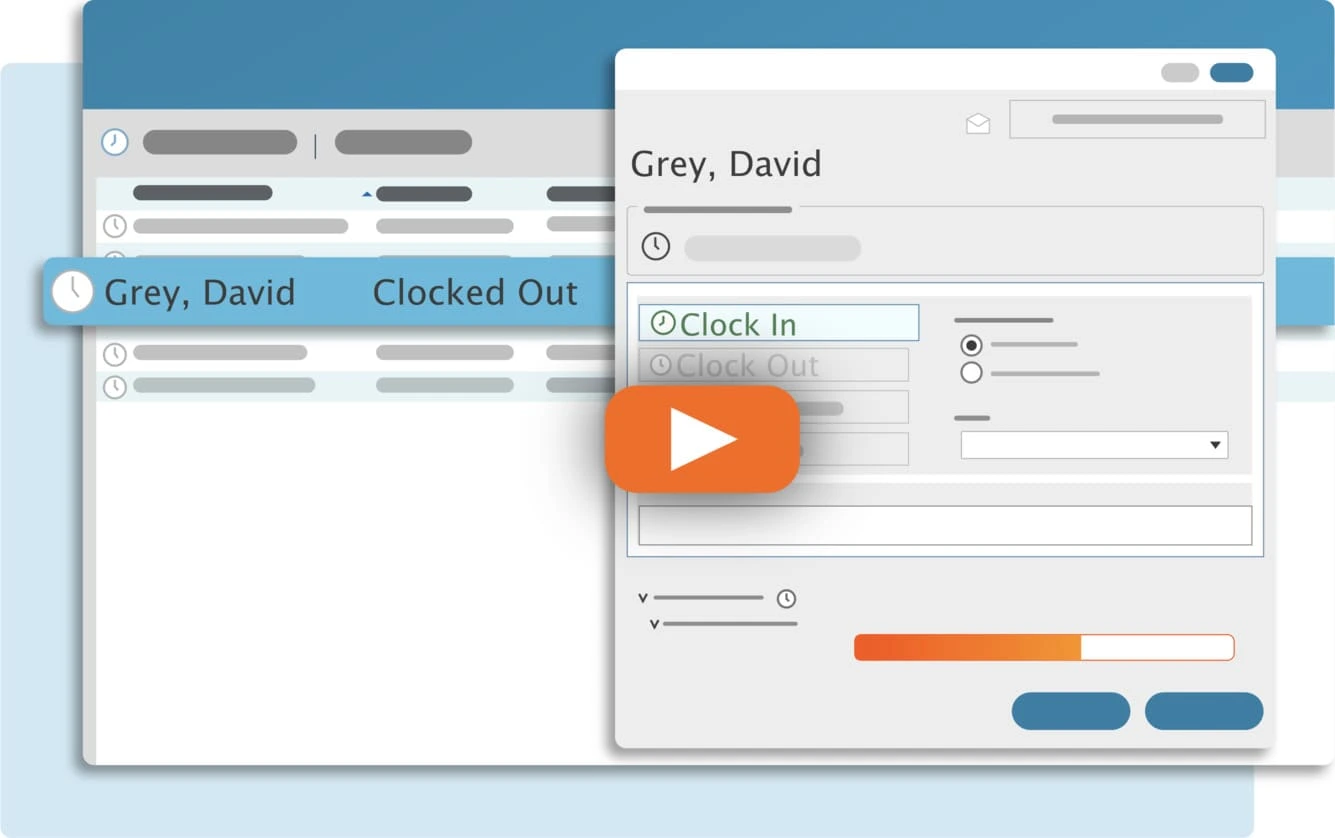
Choosing time clock software sounds simple until you start comparing options. Suddenly there are dozens of tools, all claiming they’ll save time, reduce errors, or make payroll easier.
For small businesses in the U.S., it usually comes down to a few practical questions. How do employees actually clock in and out? How long does payroll take right now? And if someone questioned your numbers, how confident would you feel defending them?

If you're brand new to time clock software and want a simple overview of how it works, start with our introductory guide before diving into the decision process: What Is Time Clock Software? A Complete Guide for Small Businesses
The best time clock software is not about having the most features. It’s about fitting how your business actually runs. When the system matches your workflow, hours are easier to track, payroll runs more smoothly, and mistakes happen less often.
This guide is for small business owners who already know they need time clock software and want to choose the right type with confidence. We focus on real-world tradeoffs, payroll impact, compliance considerations, and long-term costs so you can make a decision that actually fits how your business runs.
Table of Contents
- Why Time Tracking Is a Problem for Small Businesses
- Where Manual Time Tracking Breaks Down
- How Small Errors Turn Into Payroll Problems
- How Time Clock Software Supports Payroll and Daily Operations
- How Digital Clock In and Clock Out Systems Work
- How Time Data Turns Into Payroll-Ready Records
- Free vs Paid Time Clock Software
- What Free Time Clock Software Usually Includes
- The Limits You Hit With Free Tools
- When Free Time Clock Software Is Usually Enough
- When Paid Time Clock Software Becomes the Better Long-Term Choice
- What Makes the Best Time Clock Software for Small Businesses
- Clock-In Simplicity That Reduces Errors
- Overtime and Break Rules Applied Automatically
- Time Editing Controls and Audit Trails
- Payroll Reports and Export Options
- Multi-Device and Multi-Location Support
- Data Ownership, Privacy, and Security
- Monthly Subscriptions vs One-Time Purchases
- Comparing Popular Time Clock Software Options
- Time Clock Software and US Labor Law Compliance
- Why Accurate Time Records Matter in the USA
- Overtime, Recordkeeping, and Audit Readiness
- Why Payroll Accuracy Is a Key Factor When Choosing Time Clock Software
- Recording Time as Work Happens
- Reducing Payroll Corrections and Disputes
- Online Time Clocks vs Locally Installed Systems
- Pros and Cons of Online Time Clock Software
- Pros and Cons of Installed Time Clock Systems
- Who Benefits Most From Time Clock Software
- Industries That Rely on Hourly Time Tracking
- Small Teams vs Growing Businesses
- Common Mistakes When Choosing Time Clock Software
- Choosing Based on Price Alone
- Paying for Features You Will Never Use
- Ignoring How Employees Actually Clock In
- Not Planning for Business Growth
- Frequently Asked Questions
- Final Thoughts
Why Time Tracking Is a Problem for Small Businesses

Where Manual Time Tracking Breaks Down
Manual time tracking often starts out fine. When you have a few employees and everyone works predictable hours, a spreadsheet or paper timesheet can feel good enough. The problem is that it rarely stays that simple.
Here’s where things usually fall apart:
- Employees forget to write down a start time, break, or end time.
- Hours get filled in days later and rely on guesswork.
- You spend time deciphering handwriting or fixing totals that don’t add up.
- Managers approve timecards that are already inaccurate.
Even when everyone is acting in good faith, manual systems create small friction points. Those small issues turn into payroll edits, and payroll edits turn into wasted time.
How Small Errors Turn Into Payroll Problems
Payroll issues rarely come from one big mistake. They build up from a lot of small ones.
A few minutes rounded the wrong way. A missed lunch deduction. A shift change that never made it onto the timesheet. Over a full pay period, those gaps add up to real money.
That’s when payroll becomes stressful:
- You spend extra time rechecking totals and asking follow-up questions.
- Payroll runs later than planned because timecards still need cleanup.
- Employees start doubting the numbers, even when corrections are made.
On top of that, time tracking ties directly into compliance. In the U.S., employers are required to keep accurate records of hours worked, overtime, and pay calculations. The cleaner your time data is, the easier it is to show that everything was handled correctly if questions come up.
That’s why time clock software becomes worth it. It’s not about flashy dashboards. It’s about getting hours right the first time so payroll stops feeling like a weekly fire drill.
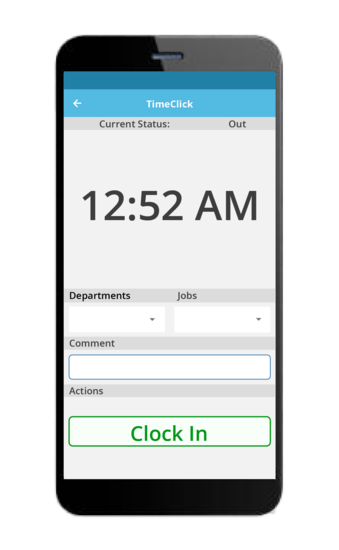
How Time Clock Software Supports Payroll and Daily Operations

How Digital Clock In and Clock Out Systems Work
At its core, time clock software captures employee work time in a consistent, structured way so payroll calculations, overtime rules, and reporting can be handled reliably.
Most systems follow a simple flow:
- An employee clocks in at the start of a shift using a computer, phone, tablet, or shared workstation.
- The system records the exact time automatically.
- Breaks and lunches are clocked in and out the same way.
- The employee clocks out when the shift ends.
Some systems run in a browser, others use mobile apps, and some are installed on a dedicated computer at your business. The setup matters less than the outcome. You get consistent, timestamped records instead of reconstructed hours.
Many systems also add basic guardrails, like flagging missed punches or requiring manager approval for edits. The goal isn’t micromanagement. It’s catching small issues before they turn into payroll problems.
How Time Data Turns Into Payroll-Ready Records
Once hours are captured, the real payoff happens behind the scenes. The software handles the math for you.
Instead of manually adding hours, calculating overtime, and double-checking totals, the system applies your pay rules automatically. Regular hours, overtime, and unpaid breaks are separated cleanly based on how your business is set up.
That leads to reports you can actually use. Total hours by employee. Overtime summaries. Timecards ready for payroll. Fewer manual steps means fewer chances for errors.
This is where time clock software really earns its keep for small businesses. Payroll becomes a review step instead of a rebuild. You’re confirming numbers rather than recreating them.
And because records are consistent and timestamped, you have clear documentation if questions ever come up about pay, overtime, or hours worked.
Free vs Paid Time Clock Software

This is usually the point where the decision becomes real. Tracking hours is easy. Tracking them accurately, consistently, and in a way that supports payroll and compliance is where differences between tools start to matter.
There are plenty of free time clock tools available. Some are genuinely helpful. Others seem fine at first but start causing issues once payroll enters the picture.
What Free Time Clock Software Usually Includes
Most free time clock tools focus on the basics. Employees can clock in and clock out, and you can usually see total hours worked.
Common features in free versions include:
- Basic clock in and clock out
- Simple timesheets
- Limited reporting
- Caps on users, locations, or data history
For very small teams with predictable schedules, this can be enough. In simple payroll situations, a free tool can handle the job.
The Limits You Hit With Free Tools
The limits usually appear as your business grows or payroll becomes less predictable.
Free tools often fall short in the areas that matter most when it’s time to run payroll:
- No automatic overtime calculations
- Weak or nonexistent audit trails for edits
- Limited export options for payroll
- Little or no customer support
When something goes wrong, you’re usually back to fixing timecards manually. That defeats the purpose of using software in the first place.
When Free Time Clock Software Is Usually Enough
Free time clock software can work well in a few specific situations:
- You have only a handful of employees
- Everyone works similar, predictable schedules
- Overtime is rare or nonexistent
- You’re testing a system before committing
In these cases, free tools can be a reasonable starting point. They let you get out of spreadsheets without adding new costs.
When Paid Time Clock Software Becomes the Better Long-Term Choice
Paid time clock software starts to make sense once time tracking affects payroll accuracy, compliance, or how much time you personally spend fixing problems.
As soon as you’re managing overtime, multiple locations, different roles, or changing schedules, automation matters. Built-in overtime rules, cleaner exports, and clear edit histories help prevent issues you’d otherwise have to fix by hand.
For many small businesses, the real cost isn’t the software. It’s the hours spent correcting mistakes, answering payroll questions, and second-guessing the numbers.
The right tool usually makes payroll faster, calmer, and far more predictable.
What Makes the Best Time Clock Software for Small Businesses

Once you get past free versus paid, the real question becomes which features actually affect payroll accuracy, daily operations, and long-term reliability.
These are the features that tend to matter most for small businesses in the U.S.
Clock-In Simplicity That Reduces Errors
If employees struggle to clock in correctly, the system will fail no matter how powerful it is. Clocking in should take seconds, not a walkthrough.
Simple interfaces lead to fewer missed punches, less training, and fewer fixes later. Whether employees use a shared computer, a phone, or a kiosk, the process should feel obvious.
Overtime and Break Rules Applied Automatically
Overtime mistakes are one of the fastest ways payroll gets messy. A solid system applies your overtime rules automatically instead of leaving the math to the end of the week.
This matters even more in states with daily overtime or meal break rules. When calculations are handled consistently, fewer things slip through.
Time Editing Controls and Audit Trails
Edits happen. Someone forgets to clock out or clocks in late by mistake. What matters is how those changes are handled.
The better systems allow managers to review and approve edits while keeping a clear record of what changed and when. That visibility protects both the business and the employee if questions come up later.
Payroll Reports and Export Options
Time tracking should make payroll easier, not harder. Clean reports and simple exports are essential.
Whether you export hours into a payroll system or run payroll manually, the data should be easy to read and easy to trust. Fewer manual steps mean fewer chances to make mistakes.
If you can glance at a report and immediately spot overtime totals or missing punches, payroll becomes faster and easier to trust.
Multi-Device and Multi-Location Support
Many small businesses don’t operate in one place. Employees may work across locations, job sites, or shifts.
A reliable time clock system handles this without confusion, applying the same rules no matter where someone clocks in.
Data Ownership, Privacy, and Security
Time records are sensitive business data. You should know where that data lives, who can access it, and how it’s protected.
Some businesses value cloud access from anywhere. Others prefer keeping data stored locally on their own systems. There’s no universal right answer, but it should be a conscious choice.
Monthly Subscriptions vs One-Time Purchases
Pricing structure matters more than many owners expect. Monthly subscriptions spread costs out but add up over time. One-time purchases cost more upfront but offer predictable long-term expenses.
The right model depends on your budget, growth plans, and comfort with ongoing fees.
You can see how these features work together in a real system on the TimeClick Time Clock Software Features Page
Comparing Popular Time Clock Software Options
There are a lot of time clock tools on the market, but they differ significantly in cost structure, deployment, and long-term control. This comparison highlights the differences that most affect small business decisions.
| Software | Setup Type | Pricing Model | Offline Support | Data Location | Best-Fit Use Case |
|---|---|---|---|---|---|
| QuickBooks Time | Online (web + mobile) | Monthly subscription | No | Cloud-hosted | Businesses already using QuickBooks |
| Homebase | Online (web + mobile) | Free tier + subscription | No | Cloud-hosted | Retail and hospitality teams |
| Clockify | Online (web + mobile) | Free + paid plans | Limited | Cloud-hosted | Very small teams with simple tracking needs |
| Deputy | Online (web + mobile) | Monthly subscription | No | Cloud-hosted | Shift-based workplaces |
| Connecteam | Online (mobile-first) | Free up to a limit + subscription | Limited | Cloud-hosted | Mobile and field teams |
| When I Work | Online (web + mobile) | Monthly subscription | No | Cloud-hosted | Scheduling-focused small businesses |
| TimeClick | Installed desktop software | One-time purchase | Yes | Stored locally | Businesses wanting offline use and fixed costs |
This comparison doesn’t cover every feature. It highlights the differences that tend to matter most when small businesses are deciding how they want to track time and manage payroll.
For a more detailed side-by-side comparison of features and pricing, see our full breakdown: Best Time Clock Software for Small Businesses in 2026
Time Clock Software and US Labor Law Compliance

For most small businesses, compliance isn’t the main reason they start looking at time clock software. It usually begins with payroll taking too long or too many mistakes creeping in.
Still, labor laws are always in the background. How you track time directly affects whether your payroll records hold up if questions ever come up.
Why Accurate Time Records Matter in the USA
In the U.S., employers are responsible for keeping accurate records of hours worked for non-exempt employees. That includes start times, end times, total hours, and overtime.
You’re not required to use a specific tool, but you are required to keep records that make sense and can be backed up later.
Clean time records matter because they:
- Make payroll easier to review and explain
- Reduce back-and-forth when employees have questions
- Help show how hours and pay were calculated
Time clock software helps by capturing hours as they happen instead of piecing them together later. That alone removes a lot of risk.
Overtime, Recordkeeping, and Audit Readiness
Federal law generally requires overtime pay after 40 hours in a workweek, and some states add additional rules.
Depending on where you operate, overtime may also apply based on daily hours or missed meal breaks. Tracking those details manually gets complicated fast.
A reliable time clock system applies your rules consistently and keeps a clear history of hours worked. That makes payroll easier to run and easier to explain if records are ever reviewed.
Time and payroll records also need to be kept for multiple years. Having organized, readable records makes it far less stressful to look back or respond to requests.
In practice, good time tracking supports compliance naturally. You’re not changing how you run your business. You’re just keeping cleaner records.
Why Payroll Accuracy Is a Key Factor When Choosing Time Clock Software

Payroll problems usually begin earlier than payroll, when hours are tracked inconsistently or filled in after the fact.
When comparing time clock systems, payroll accuracy matters less as a feature and more as a result of how time is captured, reviewed, and approved.
Recording Time as Work Happens
The biggest improvement comes from recording time as it happens. When employees clock in and out in real time, the system captures exact timestamps instead of estimates.
This eliminates common issues like:
- Forgotten start or end times
- Hours filled in from memory days later
- Rounding that slowly skews payroll totals
Because time is captured immediately, managers review real records instead of reconstructed ones. That alone reduces errors.
Reducing Payroll Corrections and Disputes
When time records are clean, payroll becomes a confirmation step instead of a cleanup job.
Overtime is calculated automatically based on your rules. Breaks are handled consistently. Totals are ready before payroll even starts.
The result is:
- Fewer manual edits before running payroll
- Less back-and-forth with employees about hours
- More confidence that paychecks are correct
Accurate time tracking also builds trust. When employees see that their hours are recorded clearly and consistently, payroll questions tend to drop off.
For small businesses, that trust matters just as much as the time saved. Payroll stops being a source of tension and becomes a routine process again.
We explain in more detail how accurate time tracking reduces payroll errors in this guide: How Employee Time Tracking Software Improves Payroll Accuracy
Online Time Clocks vs Locally Installed Systems

As businesses narrow down their options, one common decision that comes up is whether to use an online time clock or software that runs on their own computers.
Both approaches can work well, but the choice affects long-term costs, data control, reliability during outages, and how much responsibility stays with the business versus the provider.
Pros and Cons of Online Time Clock Software
Online time clocks run in a web browser or mobile app and store data on the provider’s servers. They’re popular because they’re easy to access and quick to set up.
Common advantages include:
- Access from anywhere with an internet connection
- Automatic updates and backups handled by the provider
- Support for remote teams and multiple locations
The tradeoffs usually come down to cost and connectivity.
Most online systems charge monthly fees that grow as you add employees. Internet outages can also disrupt clock-ins unless the system offers offline support.
Pros and Cons of Installed Time Clock Systems
Installed systems run directly on your business computers or network. Time records are stored locally instead of in the cloud.
Common advantages include:
- Continues working even when the internet is down
- One-time purchase instead of recurring fees
- Full control over where your data is stored
The tradeoff is responsibility. Updates, backups, and maintenance are usually handled by you rather than the software provider.
For teams that value predictable costs, offline reliability, and local data control, installed systems can be a better fit. Others prefer the convenience of online access.
Who Benefits Most From Time Clock Software

Time clock software can help almost any business, especially those with hourly staff or teams that include a mix of hourly and salaried employees.
The more moving parts you have, the harder it is to track time accurately without a system in place.
Industries That Rely on Hourly Time Tracking
Some industries depend on accurate time tracking more than others because it directly affects payroll and compliance.
Retail and hospitality businesses deal with shifting schedules, part-time staff, and frequent changes. Time clock software helps keep hours consistent and reduces disputes.
Construction and field services rely on accurate start and end times across job sites. Mobile clock-ins make it easier to track hours without chasing paper timecards.
Manufacturing and warehouses often use shared clock-in stations. A consistent system keeps shifts clean and helps prevent buddy punching.
Healthcare and home services depend on precise records for payroll and billing. Clean time logs support accountability and compliance.
Small Teams vs Growing Businesses
Very small teams can sometimes get by with simple tracking. As soon as a business adds employees, locations, or shifts, manual tracking becomes harder to manage.
Growing businesses benefit from putting structure in place early. A reliable time clock system makes it easier to scale without constantly changing processes.
Even if your team is small today, choosing software that can grow with you helps avoid painful system changes later.
Common Mistakes When Choosing Time Clock Software

Most issues with time clock software don’t come from bad intentions. They come from choosing a system that looks good on paper but doesn’t match how the business actually works.
Avoiding a few common mistakes can save a lot of frustration.
Choosing Based on Price Alone
It’s tempting to choose the cheapest option and move on. In some cases, that works for a while.
The problem shows up when the software creates more work instead of less. Time spent fixing errors and rechecking payroll quickly wipes out any savings.
Paying for Features You Will Never Use
Some platforms are built for large organizations and include features most small businesses don’t need.
More features usually mean more complexity. If employees struggle just to clock in, adoption suffers and mistakes increase.
Ignoring How Employees Actually Clock In
A system that works well for an office team may fail in a field or shift-based environment.
Before choosing software, think about where employees start and end their day. If clocking in feels inconvenient, people will forget or work around it.
Not Planning for Business Growth
Some businesses choose tools that only fit their current size.
When the team grows, switching systems can be painful, especially if historical records need to be moved or staff need retraining.
It’s usually easier to choose something that can handle where you’re headed, not just where you are today.
Frequently Asked Questions
These are some of the most common questions small business owners ask when they start evaluating time clock software.
Is free time clock software reliable for small businesses?
Free time clocks can work for very small teams with simple schedules. The limits usually appear once overtime, payroll exports, or edit tracking are needed. Many businesses start free and upgrade as payroll becomes more complex.
Do employees need internet access to clock in and out?
That depends on the system. Most online tools require internet access, while some installed systems and mobile apps can work offline and sync later.
How long should businesses keep employee time records?
Federal rules require keeping time and payroll records for several years, and some states require longer. Many businesses keep records for four to six years to stay safe.
Can managers edit time entries after employees clock out?
Most systems allow edits with manager approval. What matters is having a clear audit trail showing what changed, when it changed, and who approved it.
What type of time clock works best for small US businesses?
The best option depends on how and where employees work. Many office teams choose browser-based systems, field teams benefit from mobile apps, and businesses wanting offline reliability may prefer installed software.
Final Thoughts

There’s no single time clock that works best for every small business, but there is a right fit based on how your team works, how payroll runs, and how much control you want over costs and data.
If your current system relies on memory, paper, or spreadsheets, even a basic time clock can make a noticeable difference. Capturing hours as they happen leads to cleaner records, fewer payroll fixes, and fewer uncomfortable conversations.
As you compare options, focus less on feature lists and more on fit. Think about how people actually clock in, how often payroll runs into issues today, and whether predictable long-term costs matter more than monthly flexibility.
Some businesses choose online systems for convenience, while others prefer locally installed software they own outright. Tools like TimeClick fit that second approach, offering offline reliability and fixed costs without ongoing subscriptions.
If accurate payroll, simpler processes, and clearer visibility into work hours matter to you, choosing the right time clock software is one of the easier improvements to make.
Not using TimeClick yet? Try our time clock software free. Simple setup, unlimited users, and built for small businesses. No credit card required.
Start your FREE TimeClick Trial Today.