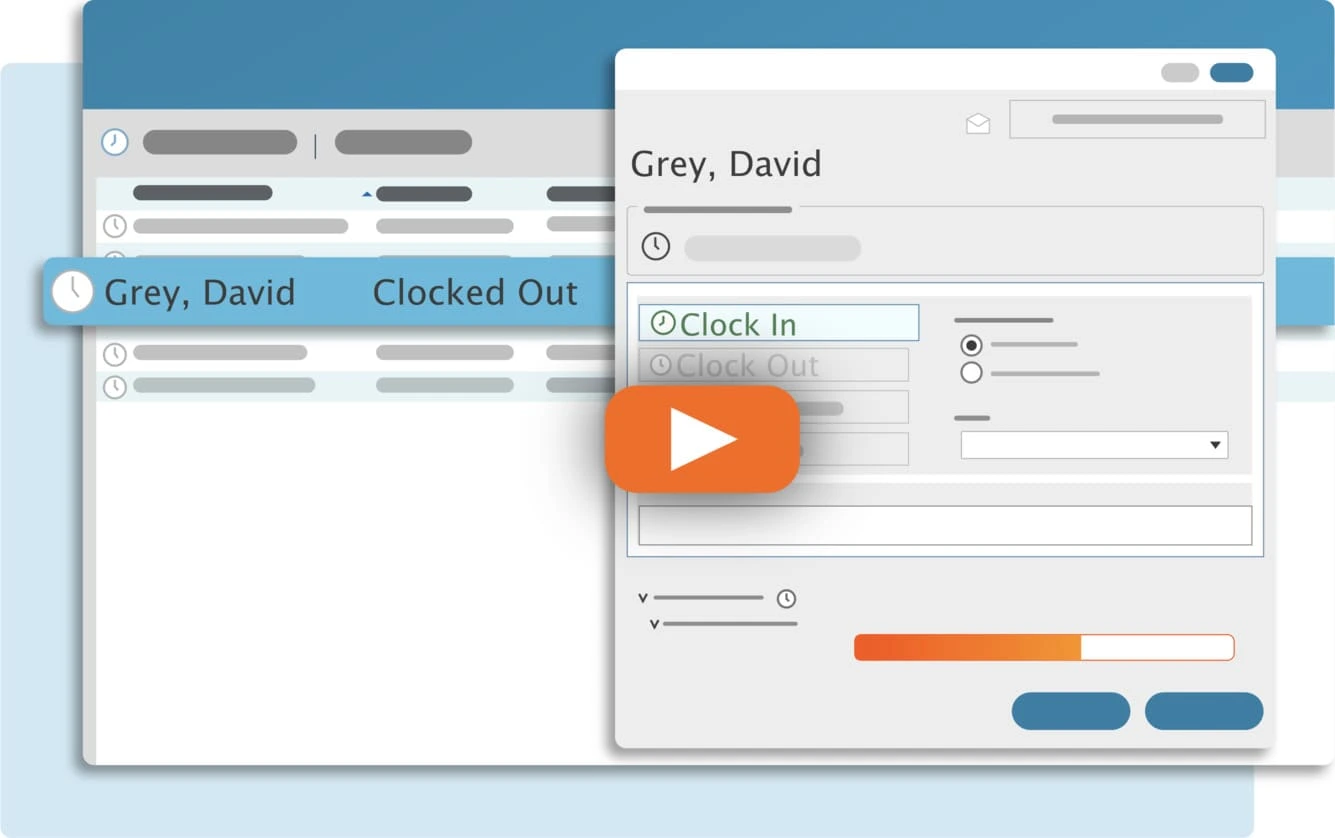
Running a small business means wearing a lot of hats, and keeping track of employee hours is one of the biggest.
Accurate timekeeping helps you pay your team fairly, simplify payroll, and stay compliant with labor laws.
This quick guide covers the basics of choosing time clock software for small businesses, highlighting core features and system types without the deep technical details.

If you want a full, in-depth walkthrough with compliance considerations and detailed comparisons, see our complete guide to choosing time clock software for small businesses
Whether you manage a small retail store, a growing office, or a remote team, you’ll find practical options here to keep your operations running smoothly.
Table of Contents
- Why Time Clocks Matter for Small Businesses
- Types of Time Clock Systems
- Traditional Punch Clocks
- Biometric Time Clocks
- Software-Based Time Clocks
- Key Features to Look For
- Common Mistakes to Avoid
- How to Choose the Right Time Clock
- Examples of Time Clock Systems Used by Small Businesses
- Final Thoughts
Why Time Clocks Matter for Small Businesses

A time clock isn’t just about clocking in and out. It keeps your business organized, saves time on payroll, and helps things run more smoothly day to day. Here’s why it’s worth having one:
- Accuracy: Time clocks record hours automatically, which means fewer mistakes and no more guessing. You’ll know exactly how many hours each employee worked.
- Efficiency: Automated time tracking saves hours of manual entry. Payroll gets done faster, reports are easier to pull, and your admin workload drops instantly.
- Compliance: Labor laws require accurate time records, and a dependable system helps you stay on the right side of those rules. It’s one less thing to worry about.
- Insights: Time data can reveal helpful patterns like attendance issues or overtime spikes. These insights help you plan better schedules and manage staffing more effectively.
Types of Time Clock Systems

There are a few different ways to track time, and the right one depends on how your business operates.
Some systems are old-school and simple, while others are fully digital and packed with automation.
Here’s a quick overview of each type.
Traditional Punch Clocks
These are the classic machines that stamp time on paper cards.
They’re straightforward and inexpensive but can be misused if one person clocks in for someone else.
They’re best suited for very small teams that just need a basic way to track hours.
Biometric Time Clocks
These use fingerprints or facial recognition to verify each employee’s identity.
They prevent time theft and boost accuracy but can be pricey and may raise privacy questions.
They work especially well for businesses in industries like retail, healthcare, or manufacturing where security and accountability are a priority.
Software-Based Time Clocks
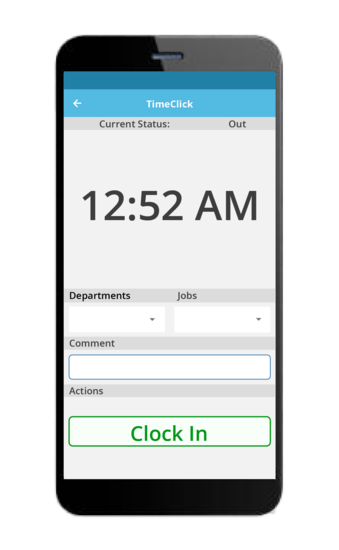
Most small businesses today rely on software-based time clock systems because they’re flexible, simple to run, and easy to connect with payroll.
You can use them from a computer or mobile app, whether you’re in the office or on the go.
Cloud tools are great for remote teams, but desktop options like TimeClick give you something cloud systems can’t - complete control.
You own your data, keep it secure, and never have to depend on someone else’s server.
Key Features to Look For
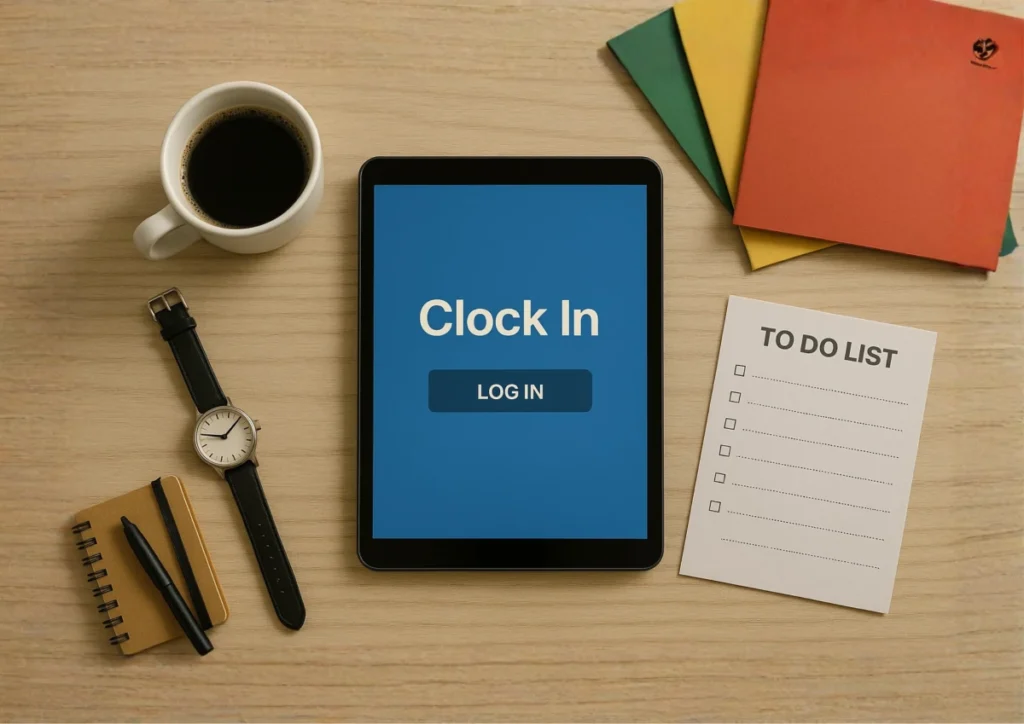
When you’re choosing a time clock, the goal is to find something that actually makes your daily work easier. Here are a few key things to keep in mind before making a decision.
Ease of Use: Go for a system your employees can learn quickly. If it’s simple and intuitive, they’ll use it correctly and you’ll spend less time troubleshooting.
Payroll Integration: Look for one that connects directly to your payroll software. This saves time, reduces errors, and keeps your records consistent across systems.
Reporting: Strong reporting tools help you see who’s working when, track overtime, and plan schedules with confidence. You shouldn’t have to dig through spreadsheets to find that information.
Scalability: Choose a system that can grow with you. Even if your team is small now, it’s nice to know you can add more employees without switching platforms later.
Cost-Effectiveness: Don’t focus only on the price tag. The cheapest system may lack features that save time or prevent payroll mistakes. A slightly higher upfront cost often pays off long term.
Common Mistakes to Avoid

Even with great options available, it’s easy to pick the wrong time clock if you’re not careful. Here are a few common pitfalls to watch out for and how to avoid them.
Skipping Employee Feedback: Since your team will use the system every day, it’s smart to get their input before you decide. If they find it confusing or slow, they’ll be less likely to use it correctly.
Forgetting Payroll Integration: A system that doesn’t connect to your payroll software adds extra work and increases the risk of errors. Integration saves time and helps keep everything consistent.
Choosing the Cheapest Option: Low-cost systems can seem appealing, but they often cut out important features. A reliable system that prevents payroll mistakes usually pays for itself over time.
Skipping Training: Even if a program like TimeClick is easy to use, a short onboarding session helps everyone get comfortable. A few minutes of training can prevent a lot of confusion later on.
How to Choose the Right Time Clock

Picking the right time clock doesn’t have to be stressful. Think of it like choosing a new tool for your team. It should fit how you work and make your life easier. Use this quick checklist to find the best fit.
- Set Your Budget: Start by deciding what you’re comfortable spending. Factor in both the upfront cost and any long-term fees so there are no surprises later.
- Understand Your Needs: Ask yourself what features matter most. Do you need mobile access for remote staff, or will a desktop setup do the job? Would biometric security help reduce time theft?
- Look for Payroll Integration: Make sure it connects with your payroll software. That one feature alone can save hours each month and help avoid errors.
- Plan for Growth: Even if your team is small now, choose a system that can scale as you hire more people. Upgrading later can be a headache.
- Test It First: Always try before you buy. Take advantage of free trials to see how it feels in real-world use before making your decision.
Examples of Time Clock Systems Used by Small Businesses

The right time clock depends on how your business runs, how big your team is, and what kind of tools you already use. Below are examples of commonly used time clock systems and the types of small businesses they tend to work best for.
If you’re looking for a full side-by-side comparison of leading time clock software for 2026, including pricing and feature differences, see our complete comparison guide.
| Time Clock System | Best For | Key Features | Pros | Cons |
|---|---|---|---|---|
| TimeClick | Small businesses that want a simple, reliable system without extra complexity | Desktop-based, mobile app, payroll integration, offline access, detailed reporting | Affordable, easy to use, works offline, built for accuracy and simplicity | Focuses on core features rather than advanced automation tools |
| Clockify | Teams looking for an all-in-one time tracking and productivity tool | Cloud-based, mobile access, GPS tracking, team collaboration features | Rich feature set, easy for large teams, integrates with popular apps | Premium plans can get expensive for bigger teams |
| QuickBooks Time (formerly TSheets) | Businesses already using QuickBooks for payroll and accounting | GPS tracking, mobile-friendly, automatic payroll sync | Seamless QuickBooks integration, strong mobile features | Requires a subscription, and it can take time to learn the interface |
| StratusTime | Growing companies that need more automation and customization | Cloud-based, biometric support, advanced reporting, payroll integration | Scalable, flexible setup, detailed insights | Higher cost and a longer setup process |
Final Thoughts

Choosing the right time clock can save you hours each month and help your business stay compliant and organized. For small businesses that want straightforward time tracking without subscriptions or unnecessary complexity, TimeClick is a practical option worth considering.
Not using TimeClick yet? Try our time clock software free for 14 days. Fast setup, unlimited users, and built specifically for small businesses.
Start your FREE TimeClick Trial Today.