Most people don't go looking for time clock software because they're excited about it. They go looking because the old way broke. A paper timesheet went missing, someone padded their hours, or payroll ate the whole afternoon again. You just want the problem to stop.
So when you start searching, you tack on a word like "simple" or "easy," because the last thing you need is software that takes a week to learn. Fair enough. A time clock should be the most boring tool in your business. It sits there, counts hours, and never asks for your attention.
This guide holds to that standard. Every pick below earned its spot on one thing: how little it asks of you. How fast it sets up, how quickly a new hire works it out, and whether it stays cheap and quiet as your team grows.
Want the exhaustive version, with the heavier feature-packed tools thrown in?

We line up all ten in our full comparison of the best time clock software for small business
Table of Contents
- What makes a time clock easy to use
- Time clock or time tracking? A quick note
- The 6 easiest time clock and time tracking tools
- 1. TimeClick: best if you'd rather buy your time clock than rent it forever
- 2. Clockify: best free tracker for a tiny team
- 3. Toggl Track: best for simple project time tracking
- 4. Homebase: best simple clock for shift work
- 5. Buddy Punch: best simple clock for field teams
- 6. OnTheClock: best plain online clock for an office
- Quick comparison
- How to pick the right one
- Frequently Asked Questions
- The bottom line
What makes a time clock easy to use
Every product page on earth claims to be easy, so it helps to pin down what the word should mean before you trust it. When we call a tool simple, it clears four low bars:
- You can set it up yourself in an afternoon, with no consultant and no support ticket.
- A new employee can clock in on day one without being shown how.
- The settings read like plain English, not an HR compliance manual.
- The price doesn't balloon every time you hire someone.
Hold any tool up to those four and the list of real contenders gets short fast.

Time clock or time tracking? A quick note
People search for both, and the line between them is fuzzy, so here it is in one breath. A time clock is about attendance: punch in, punch out, get hours for payroll. Time tracking is the bigger umbrella, and it usually adds project or task hours on top, which matters if you bill clients by the hour.
Most of the tools here do both to some degree. If you mainly need to pay hourly staff, you want a simple time clock. If you also want to know how long a job took, look for time tracking software that won't bury you in charts. Either way, the four-point test above still applies.
The 6 easiest time clock and time tracking tools
Each one below is the simple choice for a particular kind of business. Start with the situation that sounds like yours.

1. TimeClick: best if you'd rather buy your time clock than rent it forever
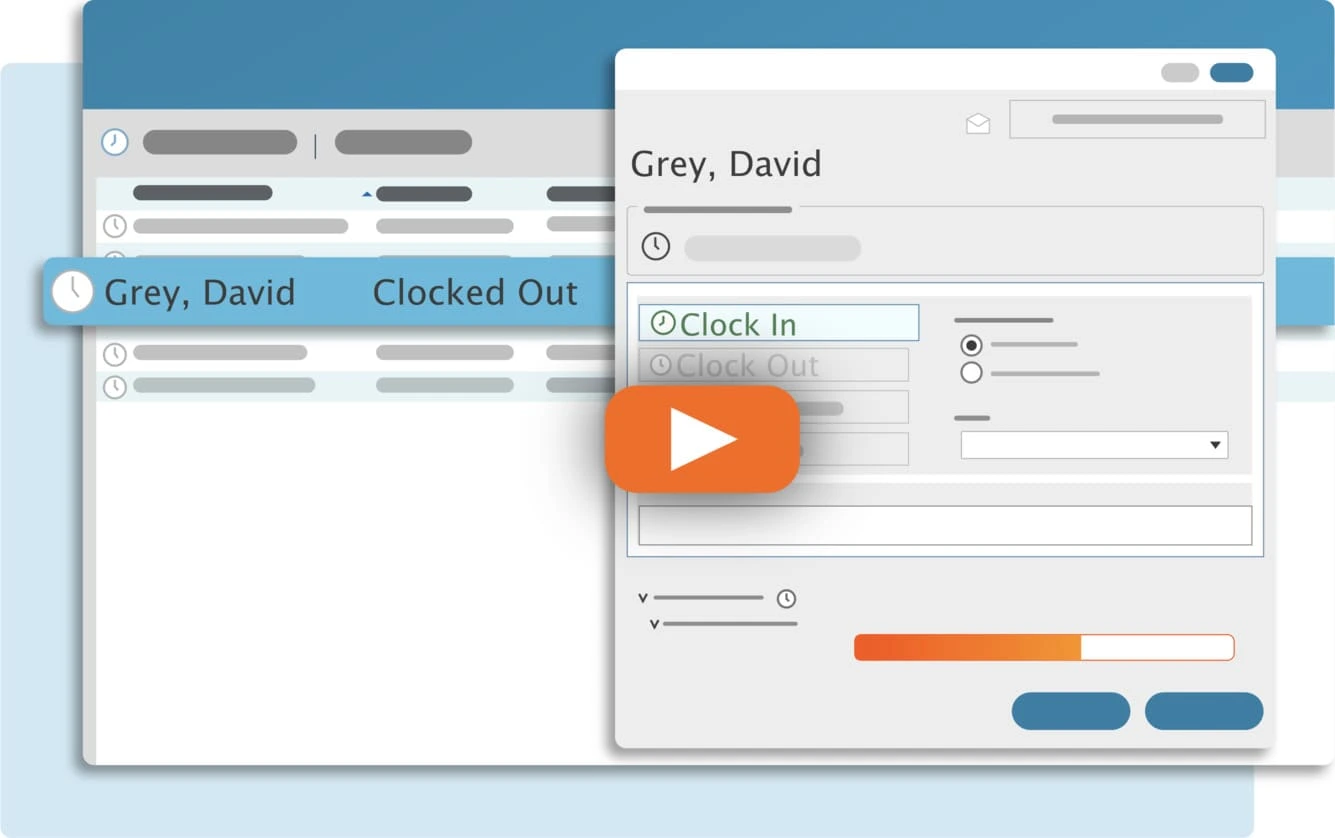
TimeClick is the odd one out on this list, in a good way. You buy it once instead of paying every month, it installs on a Windows computer in your office, and that computer becomes the clock. Your hours live on your own hardware, not in someone else's cloud, and there's no monthly bill waiting for you. Pricing starts at $99 for up to four employees on a single computer, or $299 for an unlimited-employee lifetime license. There's an optional support plan at $149 a year that you can skip without the software shutting off.
It belongs at the top of a simplicity list for a practical reason. Setup takes about ten minutes and needs no IT help. The clock-in screen is plain enough that nobody needs training. And because you pay per device instead of per person, hiring five people or a wave of seasonal staff doesn't move your cost, which is exactly the kind of slow price creep that makes subscription tools feel complicated a year in. It also keeps running when the internet drops, which a cloud app simply can't.
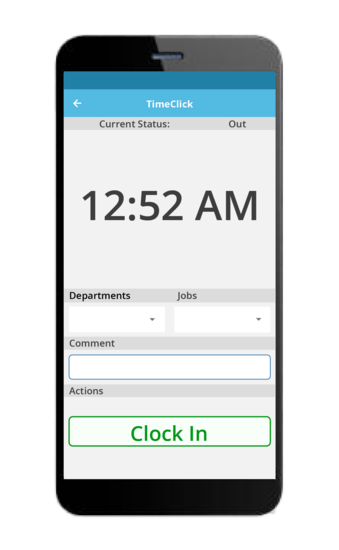
Under that simple surface it still does the real work: automatic overtime, PTO and sick time, scheduling, and clean reports you can hand straight to QuickBooks, Gusto, or ADP. Employees can also punch in from their phones with the TimeClick mobile app (that needs a 2-device license and an active support plan), and geofencing is an add-on if you want to lock clock-ins to a job site. You can see what each license includes on the pricing page.
The honest caveat: it runs on Windows and is built around a central clock computer, so it shines when your team punches in from one place or a few, not when everyone is scattered and phone-only.
Best for: single-location or few-location teams that want to own their software, keep their data in-house, and stop paying per head.
TIMECLICK TIP
Comparing a one-time license against a monthly subscription? Multiply the per-user price by your headcount, then by 36 months. That three-year number is the fairer fight, and it's usually where buy-once software pulls ahead.
2. Clockify: best free tracker for a tiny team
If your budget is zero and you mostly need to know who worked how long, Clockify is hard to argue with. The core is free for unlimited users, the interface is light, and starting a timer takes one click. It leans toward project and task tracking more than strict punch-clock attendance, so it suits freelancers and small teams billing by the hour better than a busy shop floor.
The free plan is the real draw. Approvals, GPS, and richer reports sit behind paid per-user tiers, so costs climb if you grow into them.
Best for: small or remote teams that want to start tracking time today without spending a cent.
3. Toggl Track: best for simple project time tracking
Toggl Track is Clockify's main rival, and it wins fans for one reason: it gets out of the way. One-click timers, tidy reports, almost nothing to learn. Like Clockify, it's a tracker first, aimed at people who care how long work takes rather than running a shared punch clock for hourly staff.
Best for: freelancers and agencies tracking billable hours against projects.
4. Homebase: best simple clock for shift work
Run a cafe, a shop, or a salon? Homebase puts scheduling and a time clock in one app, and the single-location plan is free. Staff clock in from a shared tablet or their phones, and the schedule lives in the same place as the timesheet, which is handy when shifts change constantly.
The free tier covers one location. Add more locations or fancier labor controls and you move to paid plans.
Best for: small shift-based teams that want scheduling and clock-in together.
5. Buddy Punch: best simple clock for field teams
Buddy Punch earns its place with plain-language design and solid tools to stop people clocking in for each other, like GPS and a photo at punch-in. It plugs straight into QuickBooks, ADP, and Paychex, so payroll export stays painless. That combination fits crews spread across job sites.
It's a subscription with a base fee plus a per-user charge, so the cost grows with your team, and the minimum can sting for a very small crew.
Best for: remote or field teams where you need to trust the clock-in data.
6. OnTheClock: best plain online clock for an office
OnTheClock hits the sweet spot for a lot of small offices. Low learning curve, a clean screen that isn't trying to impress anyone, and the everyday attendance basics done right. Payroll processing and hardware are optional add-ons, but the base plan handles most small-business needs.
Best for: a small office that wants a no-drama online clock and nothing more.
Two names you'll see elsewhere: Jibble is another free, simple option with photo and GPS clock-in, and Connecteam bundles a clock with scheduling, chat, and tasks. Connecteam is useful, but it's the opposite of minimal, so it didn't fit a list about staying simple.
Quick comparison
| Best for | Cost | Where it runs | Setup | |
|---|---|---|---|---|
| TimeClick | Owning your clock, predictable cost | One-time, from $99 / $299, no monthly fees | Your Windows PC, works offline | Under 10 min |
| Clockify | A free, no-frills tracker | Free, paid per-user tiers | Web and apps | Minutes |
| Toggl Track | Simple project time tracking | Free for small teams, then per user | Web and apps | Minutes |
| Homebase | Shift teams that want scheduling too | Free for one location, then paid | Web and apps | Minutes |
| Buddy Punch | Field teams that need honest clock-ins | Base fee plus per user | Web and apps | A few minutes |
| OnTheClock | A plain online office clock | Per user monthly, optional add-ons | Web and apps | A few minutes |
Competitor pricing is described by model rather than exact dollars, since subscription prices shift often. Check each vendor's current pricing before you buy. TimeClick figures are current as of 2026.
How to pick the right one
Match the tool to how your team works, not to the longest feature list. A few quick rules:
- Want to pay once and never see a monthly invoice? TimeClick.
- Freelancer or a couple of people on no budget? Clockify or Toggl Track.
- Running shifts and tired of scheduling by text? Homebase.
- Crew out in the field? Buddy Punch.
- Just need a clean office clock? OnTheClock.

For most small businesses in one location with a steady headcount, the quiet winner is buy-once software. A subscription feels cheap the day you sign up. What changes later is the bill, not the value, and a few years on those per-user fees have hardened into a line item you stopped questioning.
If that's the trap you're trying to dodge, TimeClick's time clock features
Frequently Asked Questions
The questions that come up most when people are filtering for the simple option.
What is the easiest time clock software to use?
For a small business, TimeClick is among the easiest to get running, since most teams install it and start clocking in within ten minutes, with no training for staff. The best fit depends on whether you want an installed clock like TimeClick or a cloud app like Clockify or OnTheClock, but all three are built so anyone can use them on day one.
What's the difference between time clock and time tracking software?
A time clock handles attendance: clocking in and out for payroll. Time tracking is broader and often adds project or task hours, which helps if you bill clients. Plenty of tools, TimeClick included, do both, so pick based on what you need rather than the label on the box.
Do simple time clocks still handle overtime and PTO?
The good ones do. Easy to use doesn't mean stripped down. TimeClick, for example, calculates overtime automatically and tracks PTO and sick time while keeping the day-to-day screen plain. Simplicity is about hiding the complexity, not removing the features.
Is there free easy-to-use time tracking software?
Yes. Clockify and Toggl Track both have free plans for small teams, and Homebase is free for a single location. Free plans usually cap users or features, so check the limits first. If you'd rather skip recurring costs entirely, a one-time license can cost less over a few years than even a cheap monthly plan.
How long does setup really take?
With any pick on this list, minutes rather than days. TimeClick usually installs in under ten minutes, and the cloud tools take about as long to sign up and add your people. None of them should need a consultant.
What's the simplest option for a very small team?
For two to five people who mostly track project time, Clockify or Toggl Track are the lightest touch, and both are free at that size. For hourly staff clocking in at one spot, TimeClick's $99 license or a clean cloud clock like OnTheClock keeps things simple without an ongoing bill to babysit.
The bottom line
The best time clock software isn't the one with the most features. It's the one your team uses without thinking, the one you forget you're even paying for. For a small business that wants fast setup, an obvious clock-in, and a price that doesn't creep, TimeClick is the standout pick: you buy it once, it runs on your own computer, there's no monthly fee, and it keeps working even when the WiFi doesn't.
When you're ready to see it in action, start a free 14-day trial
Not using TimeClick yet? Try our time clock software free. 10-minute setup, unlimited users, and built for small businesses. No credit card required.
Start your FREE TimeClick Trial Today.