Updated October 2026. Checked against the U.S. Department of Labor and the Federal Register. The sources are listed at the end.
This page used to describe the federal overtime rule that was set to start on December 1, 2016. That rule never took effect. Below is what happened to it, the two rules that came after it, and the salary threshold employers follow today.
The short answer: as of October 2026, most exempt executive, administrative and professional employees must be paid a salary of at least $684 per week ($35,568 a year). The threshold for highly compensated employees is $107,432 a year.
Table of Contents
What the Salary Threshold Does
Under the Fair Labor Standards Act (FLSA), nonexempt employees earn overtime at 1.5 times their regular rate for hours over 40 in a workweek. Federal law has no daily overtime rule.
Some salaried employees are exempt from overtime, but only if they pass three tests:
- Salary basis: they get a set amount each pay period, paid weekly or less often, that isn't cut because of the quality or quantity of their work.
- Salary level: that amount is at least the threshold, which is $684 per week today.
- Duties: their primary duty is exempt work. Examples are managing the business or a department and directing at least two full time employees, office work tied to running the business with real discretion on important matters, or work that needs advanced knowledge in a field of science or learning.
"Job titles do not determine exempt status," as the Department of Labor puts it. The salary level also doesn't apply to some jobs, such as doctors, lawyers, teachers and outside sales employees.
Current Thresholds (October 2026)
From the Department of Labor's earnings thresholds page:
| Threshold | Amount |
|---|---|
| Standard salary level | $684 per week ($35,568 a year) |
| Highly compensated employees | $107,432 a year in total pay, including at least $684 per week as salary or fee |
| Computer employees paid by the hour | $27.63 per hour |
| Bonuses and commissions | Nondiscretionary bonuses and commissions paid at least once a year can cover up to 10% of the standard level |
Some states set a higher salary level. In California, for example, exempt employees must earn at least $70,304 a year in 2026. Our guide to California overtime laws explains that rule.
Timeline: 2016 to Today
| Rule | Salary level | What happened |
|---|---|---|
| 2004 rule | $455 per week ($23,660 a year) | Enforced until the 2019 rule took over on January 1, 2020 |
| 2016 rule | $913 per week ($47,476 a year), due December 1, 2016 | Blocked by a federal court on November 22, 2016, struck down on August 31, 2017. Never took effect. |
| 2019 rule | $684 per week ($35,568 a year), from January 1, 2020 | In effect today |
| 2024 rule | $844 per week from July 1, 2024, then $1,128 per week ($58,656 a year) from January 1, 2025 | Vacated by a federal court on November 15, 2024. Appeals dismissed in May 2026. |
The 2016 Rule That Never Took Effect
The Department of Labor published the rule on May 23, 2016, with a start date of December 1, 2016. It would have:
- raised the standard salary level from $455 to $913 per week ($47,476 a year);
- set the highly compensated employee level at $134,004 a year;
- updated the levels automatically every three years.
On November 22, 2016, nine days before the start date, the U.S. District Court for the Eastern District of Texas blocked the Department from putting the rule into effect. On August 31, 2017, the same court held the rule invalid in Nevada v. U.S. Department of Labor. The Department kept enforcing the old $455 level, and the 2019 rule formally withdrew the 2016 rule.
The 2019 Rule: The Threshold in Effect Today
The Department announced a new rule on September 24, 2019, and it took effect on January 1, 2020. It:
- raised the standard salary level from $455 to $684 per week ($35,568 a year);
- raised the highly compensated employee level from $100,000 to $107,432 a year;
- let employers count nondiscretionary bonuses and commissions, paid at least once a year, toward up to 10% of the standard level.
The 2024 Rule and the Court Rulings
The Department published a new rule on April 26, 2024. It had two steps and automatic updates every three years starting July 1, 2027:
- July 1, 2024: $844 per week ($43,888 a year), with a highly compensated employee level of $132,964.
- January 1, 2025: $1,128 per week ($58,656 a year), with a highly compensated employee level of $151,164.
The courts stopped it:
- Before July 1, 2024, a court blocked the rule only for the State of Texas as an employer.
- November 15, 2024: the U.S. District Court for the Eastern District of Texas vacated the 2024 rule in Texas v. U.S. Department of Labor. The Department then went back to enforcing the 2019 levels. The January 2025 step never took effect.
- December 30, 2024: the U.S. District Court for the Northern District of Texas also vacated the rule, in Flint Avenue, LLC v. U.S. Department of Labor.
- May 5 and 7, 2026: the Fifth Circuit dismissed both appeals, so both rulings are final.
- May 15, 2026: the Department published a technical amendment in the Federal Register. It removed the 2024 text from the regulations and put the 2019 text back.
As of October 2026, the Federal Register shows no newer proposed or final salary level rule. The May 2026 amendment notes that the Department could still update the rules through notice and comment rulemaking in the future.
What Employers Should Check Now
- Pay: every exempt employee earns at least $684 per week, or your state's higher level.
- Duties: each exempt employee's main job really is exempt work. A title alone isn't enough.
- Hours: you track hours for every nonexempt employee, including salaried nonexempt staff, so weekly overtime is paid correctly.
- Old guidance: pages that still mention $913, $844 or $1,128 per week describe rules that are no longer in effect.
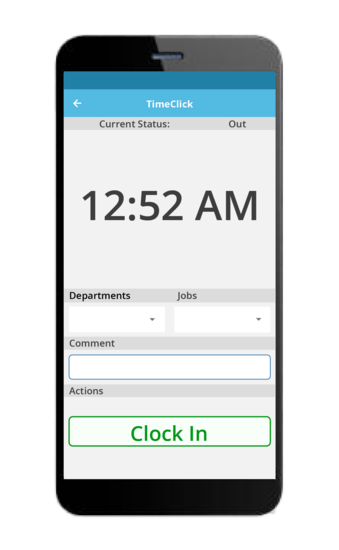
A time clock makes the hours part simple. TimeClick employee time tracking records each punch and totals weekly overtime, and the free time card calculator checks a single week.
Federal Overtime Salary Threshold FAQ
What is the federal overtime salary threshold in 2026?
$684 per week, or $35,568 a year, for most exempt executive, administrative and professional employees. The highly compensated employee threshold is $107,432 a year.
Did the $1,128 per week threshold take effect?
No. A federal court vacated the 2024 rule on November 15, 2024, before the January 1, 2025 increase. The appeals were dismissed in May 2026.
What happened to the December 1, 2016 overtime rule?
A federal court blocked it on November 22, 2016 and struck it down on August 31, 2017. It never took effect, and the 2019 rule formally withdrew it.
Is a new federal salary threshold coming?
Not as of October 2026. No new salary level rule has been proposed, although the Department of Labor has said it could update the rules in the future.
Can a state require a higher salary than the federal threshold?
Yes. Some states set a higher level. California, for example, requires at least $70,304 a year in 2026.
Sources
All checked in October 2026.
- Department of Labor: Earnings thresholds
- Department of Labor news release, May 14, 2026
- Federal Register, May 15, 2026: technical amendment (91 FR 27833)
- 29 CFR 541.600 (current text)
- Federal Register, April 26, 2024: the 2024 rule
- Federal Register, September 27, 2019: the 2019 rule
- Department of Labor news release, September 24, 2019
- Federal Register, May 23, 2016: the 2016 rule
- Department of Labor Fact Sheet #17A: exemptions
- Department of Labor Fact Sheet #17G: salary basis
- Department of Labor: Overtime pay
Not using TimeClick yet? Try our time clock software free. Simple setup, secure offline data, and built for small businesses. No credit card required.
Start your FREE TimeClick Trial Today.