Updated October 2026. Every rule below was checked against the California Labor Code and the Labor Commissioner's pages. The sources are listed at the end.
California has some of the strictest overtime rules in the country. Federal law only requires overtime after 40 hours in a workweek. California adds daily overtime, double time and a seventh day rule, so even a short week can include overtime.
This guide covers the rules for nonexempt employees, with worked examples. It also explains how the daily and weekly rules fit together, alternative workweeks, the regular rate of pay, and the 2026 salary test for exempt employees.
This is a general overview, not legal advice. For a specific situation, talk to a California employment attorney or the Labor Commissioner's office.
Table of Contents
- California Overtime Rules at a Glance
- Workdays and Workweeks
- Daily Overtime
- Double Time
- Weekly Overtime
- When Daily and Weekly Overtime Overlap
- The Seventh Consecutive Day
- Alternative Workweek Schedules
- The Regular Rate of Pay
- Exempt Employees and the 2026 Salary Test
- Other Exceptions
- Tracking California Overtime With TimeClick
- California Overtime FAQ
- Sources
California Overtime Rules at a Glance
Nonexempt employees in California earn overtime in these cases, under Labor Code section 510(a):
| Hours worked | Pay rate |
|---|---|
| More than 8 hours in a workday, up to and including 12 | 1.5 times the regular rate |
| More than 12 hours in a workday | 2 times the regular rate (double time) |
| More than 40 hours in a workweek | 1.5 times the regular rate |
| First 8 hours on the seventh consecutive day of work in a workweek | 1.5 times the regular rate |
| More than 8 hours on that seventh day | 2 times the regular rate |
Only hours actually worked count. Sick days, vacation and paid holidays don't count toward overtime, even when they're paid. Our guide to whether PTO counts towards overtime covers this in more detail.
Two more rules from the Labor Commissioner's overtime FAQ:
- An employee can't give up the right to overtime by agreement (Labor Code section 1194).
- Overtime earned in one pay period is due no later than the payday for the next regular payroll period (section 204).
Workdays and Workweeks
Both the daily and the weekly rules depend on how the day and the week are set:
- Workday: any consecutive 24 hour period that starts at the same time each calendar day (section 500(a)). It can start at any hour and doesn't have to match the start of a shift. Different shifts can have different workdays.
- Workweek: any seven consecutive days that start on the same calendar day each week, a fixed and recurring period of 168 hours (section 500(b)).
- Changes: a workday or workweek can only be changed if the change is meant to be permanent and isn't designed to avoid overtime. Hours can't be averaged across two or more days (Labor Commissioner's glossary).
Daily Overtime
Hours over 8 in a workday, up to and including 12, are paid at 1.5 times the regular rate. This applies even when the employee works fewer than 40 hours that week.
Example: Jill works three days this week.
| Day | Hours worked | Regular | Overtime (1.5x) |
|---|---|---|---|
| Monday | 10 | 8 | 2 |
| Tuesday | 5 | 5 | 0 |
| Wednesday | 10 | 8 | 2 |
| Total | 25 | 21 | 4 |
Jill didn't come close to 40 hours, but she still earns 4 hours of overtime for her two long days.
Double Time
Hours over 12 in a workday are paid at 2 times the regular rate.
Example: Jill works a 13 hour day on Monday.
| Day | Hours worked | Regular | Overtime (1.5x) | Double time (2x) |
|---|---|---|---|---|
| Monday | 13 | 8 | 4 | 1 |
| Tuesday | 9 | 8 | 1 | 0 |
| Wednesday | 8 | 8 | 0 | 0 |
| Total | 30 | 24 | 5 | 1 |
On Monday, hours 9 through 12 are overtime and the 13th hour is double time.
Weekly Overtime
Regular hours over 40 in a workweek are paid at 1.5 times the regular rate. Federal law has the same weekly rule, but no daily rule.
Example: Jill works 7 hours a day, Monday to Saturday, for 42 hours. No day goes over 8 hours, so there's no daily overtime. Her regular hours pass 40 by 2, so she earns 2 hours of weekly overtime.
When Daily and Weekly Overtime Overlap
An hour is only paid at one overtime rate. Labor Code section 510(a) says an employer doesn't have to combine more than one overtime rate for the same hour. The Labor Commissioner's overtime worksheet instructions (DLSE Form 55) count weekly overtime on regular hours over 40.
So work it out in this order:
- Find each day's overtime and double time hours.
- Add up the regular hours left for the week.
- Any regular hours over 40 are weekly overtime.
Example 1: Jill works 56 hours over five days.
| Day | Hours worked | Regular | Overtime (1.5x) | Double time (2x) |
|---|---|---|---|---|
| Monday | 14 | 8 | 4 | 2 |
| Tuesday | 14 | 8 | 4 | 2 |
| Wednesday | 10 | 8 | 2 | 0 |
| Thursday | 10 | 8 | 2 | 0 |
| Friday | 8 | 8 | 0 | 0 |
| Total | 56 | 40 | 12 | 4 |
Her regular hours come to exactly 40, so no weekly overtime is added. Paying 16 more hours of weekly overtime here would pay the same hours twice.
Example 2: Jill works 10, 10, 8, 8, 8 and 4 hours, Monday to Saturday, for 48 hours. Monday and Tuesday give her 4 hours of daily overtime. That leaves 44 regular hours, which is 4 over 40, so she also earns 4 hours of weekly overtime. Total: 40 regular hours and 8 overtime hours.
The Seventh Consecutive Day
When an employee works all seven days of a workweek, the seventh day has its own rule. The first 8 hours that day are paid at 1.5 times the regular rate, and hours over 8 at 2 times (section 510(a)).
- The seven days must fall in the same workweek. A run of seven days that crosses into the next workweek doesn't trigger the rule.
- An employer can't discipline an employee for refusing to work the seventh day in a workweek.
Example 1: Jill's workweek starts on Sunday. She works 4 hours every day, Sunday to Saturday, for 28 hours. Saturday is her seventh consecutive day, so those 4 hours are overtime. Total: 24 regular hours and 4 overtime hours.
Example 2: Jill works 4 hours on Sunday and Monday, 8 hours Tuesday to Friday, and 10 hours on Saturday, for 50 hours. Sunday to Friday adds up to 40 regular hours. Saturday is the seventh day: the first 8 hours are overtime and the last 2 are double time. Total: 40 regular hours, 8 overtime hours and 2 double time hours.
Alternative Workweek Schedules
An employer can set up an alternative workweek schedule, such as four 10 hour days or three 12 hour days. At least two thirds of the affected employees in a work unit must approve it in a secret ballot election (Labor Code section 511(a)).
Under a valid alternative workweek, according to the Labor Commissioner:
- No overtime is due for scheduled days of up to 10 hours within a 40 hour week.
- Hours beyond the scheduled day, up to 12, and hours over 40 in the week are paid at 1.5 times.
- Hours over 12 in a day, and hours over 8 on a day that isn't a scheduled workday, are paid at 2 times.
- If the employer has the employee work fewer hours than scheduled, overtime is due after 8 hours that day (under most wage orders).
The employer can't lower the regular hourly rate because of the schedule (section 511(c)) and must report the election results within 30 days (section 511(e)). The election itself has strict steps, including written disclosure and a meeting at least 14 days before the vote, so check the wage order for your industry before setting one up.
The Regular Rate of Pay
Overtime is paid on the regular rate, which can be more than the base hourly wage. From the Labor Commissioner's overtime FAQ:
- Included: hourly pay, salary, piecework, commissions, shift differentials and nondiscretionary bonuses.
- Left out: gifts for special occasions, expense reimbursements, pay for time not worked (vacation, holidays, illness), discretionary bonuses, and some weekend or holiday premiums of at least 1.5 times.
- Two or more pay rates in one week: divide total earnings by total hours to get a weighted average.
- Salaried nonexempt employees: the hourly rate is the weekly salary divided by 40. For a monthly salary, multiply by 12, divide by 52, then divide by 40.
- The regular rate can never be lower than the minimum wage.
Example: a salaried nonexempt employee earns $4,000 a month. $4,000 times 12 is $48,000, divided by 52 is $923.08 a week, divided by 40 is a regular rate of $23.08 an hour. The overtime rate is $34.62 an hour.
Exempt Employees and the 2026 Salary Test
Exempt employees don't earn overtime, but a salary alone doesn't make someone exempt. A salaried employee "must be paid overtime unless they meet the test for exempt status," says the Labor Commissioner. To be exempt as an executive, administrative or professional employee, a person must meet both tests in Labor Code section 515(a):
- Duties: spend more than half of their work time on exempt duties, and regularly use discretion and independent judgment.
- Salary: earn a monthly salary of at least two times the state minimum wage for full time work, which means 40 hours a week.
| Year | State minimum wage | Minimum exempt salary |
|---|---|---|
| 2025 | $16.50 an hour | $68,640 a year |
| 2026 | $16.90 an hour | $70,304 a year |
| 2027 (announced) | $17.40 an hour | $72,384 a year |
The 2026 figure is $16.90 times 2, times 40 hours, times 52 weeks. The 2027 increase takes effect on January 1, 2027. California's salary level is much higher than the federal one, which is $684 a week or $35,568 a year. See our guide to the federal overtime salary threshold for that rule.
Other Exceptions
Some jobs follow different overtime rules under their industry wage order or other laws. Two examples from the Labor Commissioner:
- Agricultural workers: since January 1, 2025, employers with 25 or fewer employees also pay overtime after 8 hours a day or 40 hours a week, and double time after 12 hours. Employers with 26 or more reached that point in 2022 (overtime for agricultural workers).
- Truck drivers: many truck drivers are not required to be paid overtime under state law.
For the full lists, see the Labor Commissioner's pages on exceptions to the overtime law and exemptions from the overtime laws.
Tracking California Overtime With TimeClick
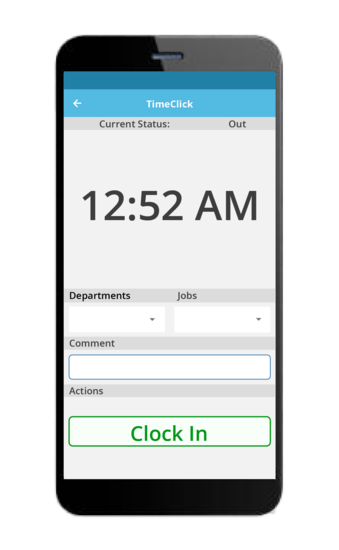
TimeClick can apply California's daily, weekly and double time thresholds for you. In Admin mode, open Preferences, then the Pay Period and OT tab. Turn on the daily, double time and weekly options, check each threshold, and set the day your workweek starts. Our guide to calculating California overtime in TimeClick walks through each step.
To check a single week by hand, the free time card calculator applies daily and weekly overtime limits. Add any double time and seventh day hours yourself.
California Overtime FAQ
Does California require overtime after 8 hours?
Yes. Hours over 8 in a workday, up to and including 12, are paid at 1.5 times the regular rate, even if the employee works fewer than 40 hours that week.
When does double time start in California?
After 12 hours in a workday, and after 8 hours on the seventh consecutive day of work in a workweek.
Do paid holidays or sick days count toward overtime in California?
No. Overtime is based on hours actually worked. Paid time off, sick days and holidays don't count toward the daily or weekly limits.
Can an employee agree to skip overtime pay?
No. Under Labor Code section 1194, an employee can't give up the right to overtime by agreement.
What is the minimum salary for exempt employees in California in 2026?
$70,304 a year, which is two times the $16.90 state minimum wage for full time work. It rises to $72,384 on January 1, 2027.
Is a salaried employee automatically exempt from overtime?
No. The employee must also pass the duties test. A salaried employee who doesn't meet both tests is owed overtime.
Sources
All checked in October 2026.
- California Labor Code section 500 (workday, workweek, alternative workweek)
- California Labor Code section 510 (daily, weekly and seventh day overtime)
- California Labor Code section 511 (alternative workweek schedules)
- California Labor Code section 515 (exempt employees)
- Labor Commissioner: Overtime FAQ
- Labor Commissioner: DLSE Form 55 instructions
- Labor Commissioner: Glossary (workday, workweek)
- Labor Commissioner: Exceptions to the general overtime law
- Labor Commissioner: Exemptions from the overtime laws
- Labor Commissioner: Minimum wage FAQ
- DIR news release 2025-118 (2026 minimum wage and exempt salary)
- DIR news release 2026-66 (2027 minimum wage)
- DIR news release 2024-107 (2025 minimum wage and exempt salary)
- Labor Commissioner: Overtime for agricultural workers
Ready to streamline your employee time tracking, boost productivity, and simplify payroll? Sign up for your FREE 14-day trial today and see how TimeClick can transform your business!
Start your FREE TimeClick Trial Today.